

If you’ve scrolled through TikTok comments or gotten a cryptic text reading just “LDAB,” you already know it’s one of the more confusing acronyms floating around the internet right now. Unlike well-established slang like LOL or IDK, LDAB doesn’t have one settled definition. Ask ten people and you might get five different answers.
This guide breaks down every major meaning of LDAB, where the term came from, how tone and context change what it’s actually saying, and how to reply if someone sends it your way.
What Does LDAB Mean in Text?
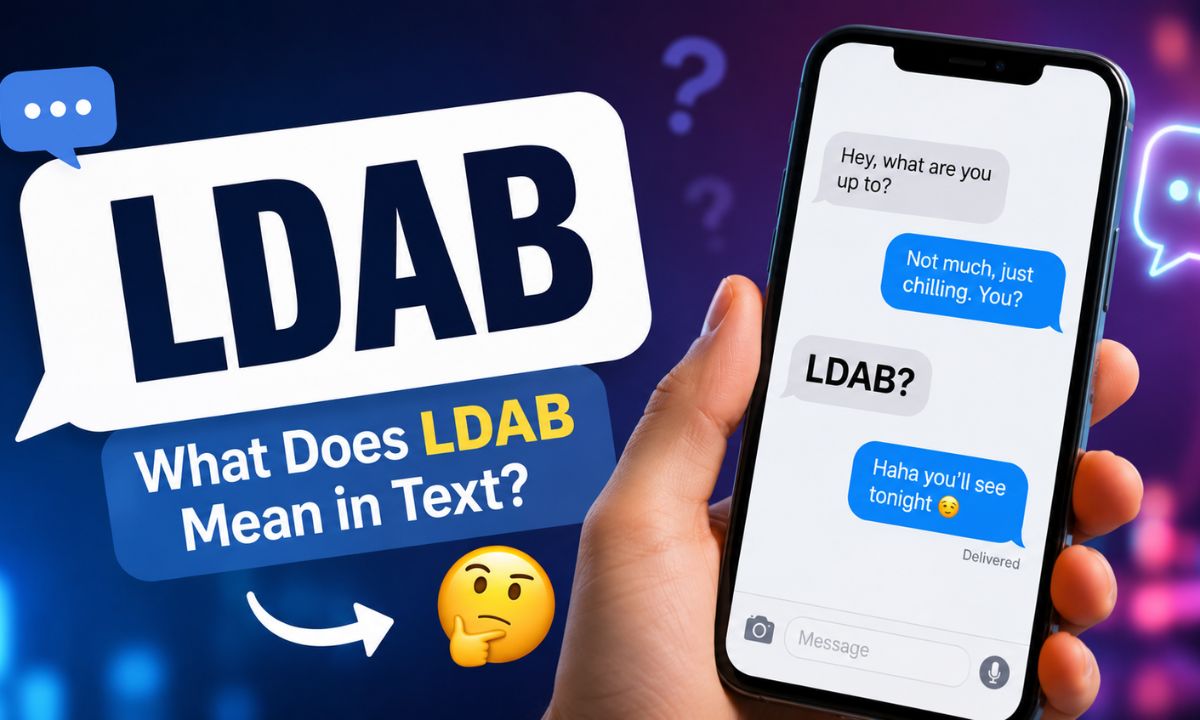
LDAB is a slang acronym with multiple, often conflicting meanings depending on who’s using it and where. It surged in popularity in 2025 after a viral social media post described someone receiving a one-word text — “LDAB” — the morning after a one-night stand. From there, the term split into several different interpretations across TikTok, Facebook, and X (formerly Twitter).
Because it isn’t standardized the way older texting abbreviations are, LDAB is a genuine case where context does most of the work. The same four letters can read as a crude insult, a joking dismissal, or even an invitation to be more emotionally honest.
LDAB Full Form
There isn’t a single agreed-upon full form. Instead, LDAB functions more like a container acronym that different online communities have filled in with their own phrase. The most frequently cited versions include:
- Little Dick And Balls
- Little Dick Ass Boy
- Let’s Do It Again
- Laughing Doing A Bit
- Let’s Drop All Barriers
What Does LDAB Stand For?
The honest answer is that LDAB stands for whatever the sender intends it to mean in that specific conversation. It emerged from meme culture, where short, ambiguous acronyms spread fast precisely because people can’t agree on what they mean — which fuels curiosity, comments, and shares.
The dominant origin story traces back to a January 2025 post where someone described a one-night stand ending with a partner texting only “LDAB” the next morning. That post exploded across Facebook and TikTok, and commenters offered competing decodings, cementing the term as internet slang almost overnight.
LDAB Meaning in Different Contexts
LDAB doesn’t behave the same way in every setting. The platform and the relationship between the two people texting change which interpretation is most likely.
| Context | Likely Meaning | Tone |
| After a hookup or one-night stand | An insult about a partner’s size or performance | Blunt, dismissive |
| TikTok comment sections | A joke reaction or reference to the viral post | Playful, sarcastic |
| Casual friend group chats | “Let’s do it again” or a lighthearted callback | Teasing |
| Deep or emotional conversations | “Let’s drop all barriers,” asking for honesty | Sincere, vulnerable |
| Gaming or Discord chats | Reaction to something funny, similar to LMAO | Casual |
LDAB Meaning in Text From a Girl
When a woman sends LDAB in the middle of an emotionally open conversation, it’s rarely meant as an insult. In that setting, it usually leans toward “let’s drop all barriers” — a request for more honesty or less guardedness between two people. This meaning is far less common than the crude interpretation, but it does show up in relationship-focused conversations where the tone has already turned personal. If the exchange has been playful or sexual instead, the ruder definitions become far more likely.
Is LDAB Rude, Offensive, or Neutral?
It depends entirely on which meaning applies. Several of the most-cited versions of LDAB reference male anatomy in a mocking, insulting way, which makes those uses genuinely rude and best avoided in polite or professional company. Other uses — a joke reaction, a callback to a meme, or a request for honesty — are essentially neutral or even affectionate. Because the acronym straddles both extremes, sending it to someone without knowing how they’ll interpret it is risky.
Where Is LDAB Commonly Used?
- TikTok — comment sections and duet videos reacting to the viral one-night-stand post
- Facebook groups — reshared jokes and screenshots asking “what does this mean?”
- X (Twitter) — quote-tweets debating the “real” definition
- Text messages — used personally, often after a date, hookup, or casual conversation
- Group chats — as a punchline or inside joke among friends who already know the context
Real-Life Conversation Examples
After a date or hookup: Text: “LDAB 😒” — Meaning: a dismissive, insulting comment about the other person.
In a friend group chat: “That party last night was wild, LDAB fr” — Meaning: “let’s do it again,” said as a joke or genuine invite.
In a deeper conversation: “I feel like we’re not saying what we actually mean.” / “Yeah, maybe we should LDAB for once.” — Meaning: a request to be more open and honest.
Emotional and Psychological Meaning
Underneath the confusion, LDAB usage often reflects a real communication pattern. When it’s used as an insult, it’s a way of venting frustration quickly and anonymously, similar to how people use other blunt acronyms to avoid a longer confrontation. When it’s used to request honesty, it reflects a desire to skip small talk and get to something more genuine. In both cases, the person sending it is trying to compress a bigger feeling into the smallest possible message — which is exactly why the tone matters more than the letters themselves.
Also Read This: WYD Meaning in Text: What Does WYD Mean in Texting & Slang? (2026)
Origin and Background of LDAB
LDAB’s viral breakout traces to a Facebook post from January 2025, where a user described getting a “LDAB” text after a one-night stand and asked the internet to explain it. The post was shared widely, then picked up by TikTok creators who recreated the scenario in their own videos, racking up tens of thousands of views within days.
Comment sections quickly split into camps: some insisted it referenced male anatomy in an unflattering way, others offered “let’s do it again,” and a smaller group pushed the more wholesome “let’s drop all barriers” reading. No single source has ever definitively settled which meaning came first, which is part of why the term still generates debate.
Comparison with Similar Slang
| Acronym | Common Meaning | How LDAB Compares |
| LOL | Laughing out loud | Both used as reactions, but LDAB carries more ambiguity |
| SMH | Shaking my head, disapproval | LDAB can express similar dismissiveness in the insult sense |
| IYKYK | If you know, you know | Both rely heavily on shared context to be understood |
| NGL | Not gonna lie | LDAB’s honesty-focused meaning overlaps with NGL’s directness |
Why People Use LDAB
- Novelty — it’s new enough to feel like an inside joke
- Ambiguity — the mystery itself drives engagement and comments
- Efficiency — four letters replace a much longer, more awkward sentence
- Social currency — using trending slang signals you’re online and in the loop
- Emotional shorthand — in its softer meaning, it’s a quick way to ask for honesty without a long speech
When to Use LDAB
LDAB works best in casual, low-stakes settings with people who already understand internet slang — close friends, group chats, or meme-adjacent social media posts where a joking tone is obvious.
When to Avoid Using LDAB
- In professional emails, work chats, or messages to a boss
- With someone you’ve just met, since the meaning could easily be misread
- In serious or sensitive conversations where ambiguity could cause hurt feelings
- With older relatives or anyone unfamiliar with internet slang, who may take it literally or personally
Polite Alternatives
If you want to express one of LDAB’s meanings without the confusion:
- Instead of the insult version: keep criticism direct and private rather than coded
- Instead of “let’s do it again”: say “we should do this again sometime”
- Instead of “let’s drop all barriers”: say “can we just be honest with each other?”
Impact of Using Slang in Communication
Ambiguous slang like LDAB speeds up casual conversation but can just as easily cause a misunderstanding, especially across generations or between people who don’t share the same online spaces. A term with multiple opposite meanings puts extra weight on tone, emojis, and prior context — without those cues, the receiver is left guessing, which is exactly what happened in the original viral post that started this whole trend.
Is LDAB Safe for Social Media?
Using LDAB publicly on platforms like TikTok or X is generally low-risk since it’s understood as slang tied to a well-known meme. That said, because some interpretations are crude, it’s worth considering your audience before posting it in a caption or comment meant for a wider or more professional following.
Common Misunderstandings
- Assuming LDAB always has the crude meaning, when context might point to something lighter
- Assuming everyone has seen the viral post that made it popular
- Using it in a serious conversation and having it land as sarcastic instead of sincere
- Taking a joking use of LDAB literally, especially across age groups
Variations and Similar Types
Slang creators have since floated a handful of alternate readings, including “Lying Down And Bored,” “Long Distance And Busy,” and “Laughing Doing A Bit.” None of these has overtaken the original viral meanings, but they show how quickly an ambiguous acronym gets reinterpreted once it starts trending.
How to Respond When Someone Uses LDAB
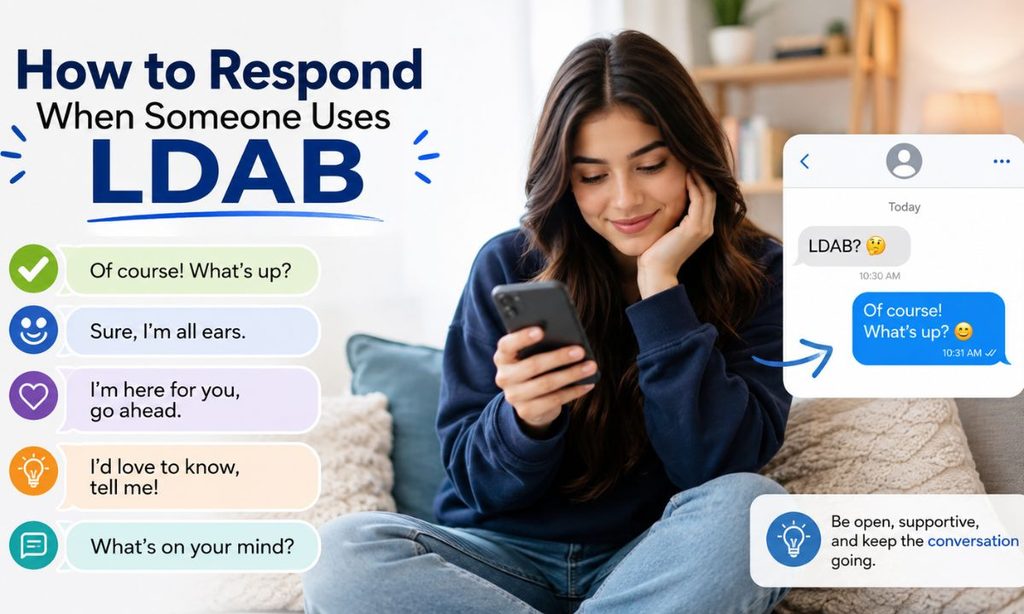
If you’re unsure which meaning applies, the safest move is to ask directly: “What do you mean by that?” This avoids responding to an insult with a joke, or misreading a sincere request for honesty as a punchline. Matching the sender’s tone — casual for casual, serious for serious — is usually enough to keep the conversation on track.
Regional and Cultural Usage
LDAB doesn’t show strong regional patterns yet; its spread has been driven almost entirely by social media virality rather than any specific region or subculture. It appears most often among younger, terminally online users in English-speaking countries, particularly in U.S.-based TikTok and Facebook communities where the original viral post originated.
Conclusion
LDAB is proof that a handful of letters can carry wildly different weight depending on who sends them and why. It can be a blunt insult, a playful callback, or a genuine request for honesty — and without context, there’s no reliable way to know which one you’re looking at.
If you come across it in a text or a comment section, take a beat, consider the relationship and the tone of the conversation, and don’t be afraid to just ask. With slang this ambiguous, a quick clarifying question will always beat a guess.

Harrison is a passionate writer and researcher behind StyleFitts.com, dedicated to exploring meanings, word origins, and language trends. He creates clear and informative content that helps readers better understand modern expressions and their deeper significance.